Waterking is the only manufacturer in the world that fully complies with the ES-TRIN requirements for European inland waterway transport. Find out what this means and why it is important.
ES-TRIN is a set of regulations governing European inland waterway transport (European Standard laying down Technical Requirements for Inland Navigation vessels). These regulations focus on technical and safety requirements. Compliance with these requirements enhances safety and environmental performance on inland waterways. This is a responsibility that also lies with the client.
Furthermore, in order to access certain waters, the floating vessel or inland waterway vessel must hold an ES-TRIN certificate.
Many people are not yet familiar with this regulation, an important European regulation governing workboats. Since 2021, such a certificate has been mandatory in many parts of Europe to demonstrate the safety and stability of these vessels.
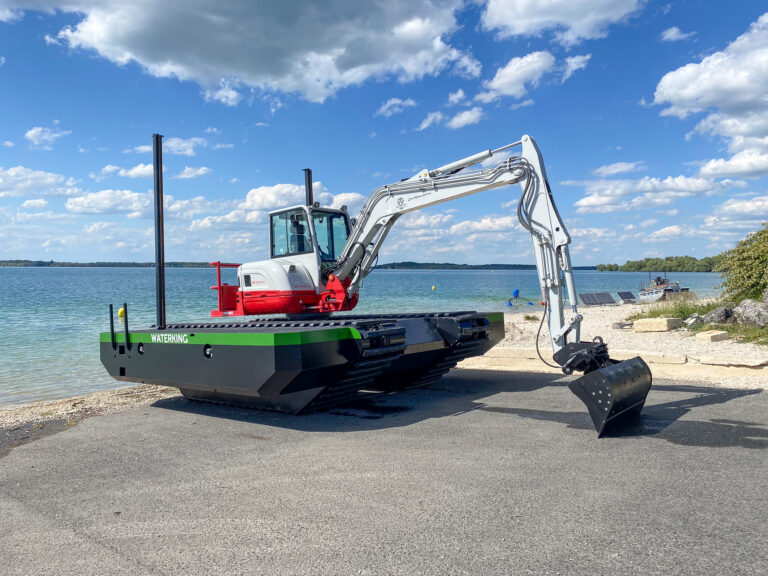
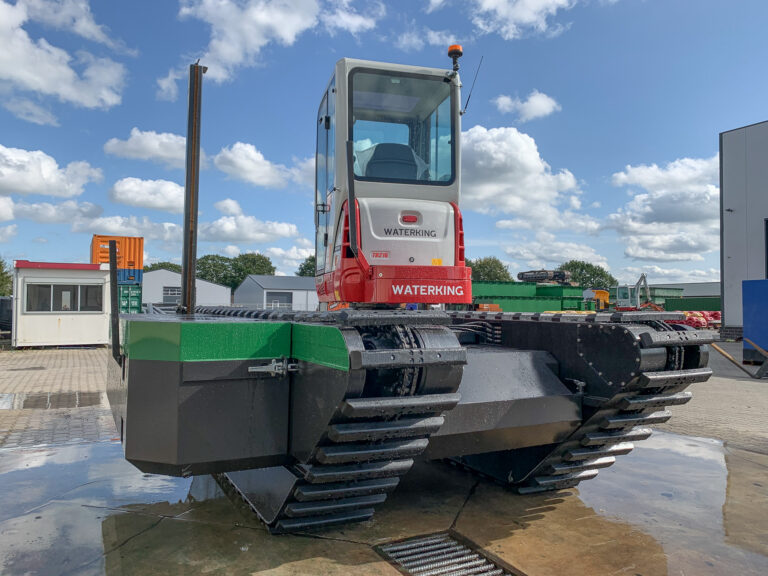
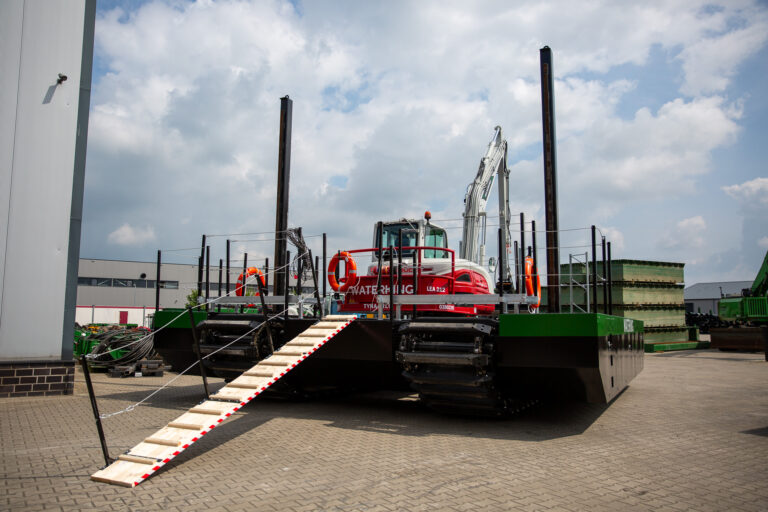
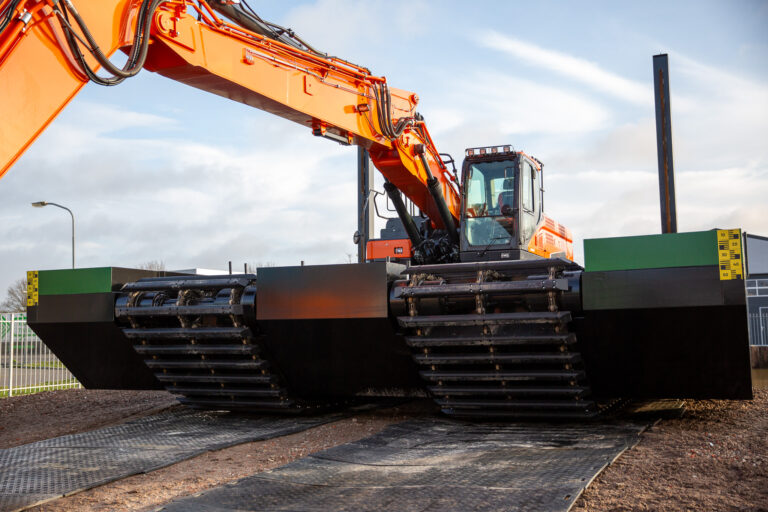
Amphibious excavators also fall under the category of ‘floating machinery’. We therefore set about having our entire fleet of Waterking excavators fully certified straight away in 2021.
During 2028, ES-TRIN will also play a role in coupling pontoons. Coupled pontoons forming part of a configuration must comply with ES-TRIN legislation and regulations. The temporary transitional arrangement for plate thicknesses has been withdrawn.
The minimum plate thickness of a Waterking NATO pontoon and an XL pontoon is 3.0 mm. Check used pontoons carefully to prevent work from being halted. New NATO pontoons have a wall thickness of 4.0 mm and new XL pontoons 6.0 mm, and they more than meet this requirement.
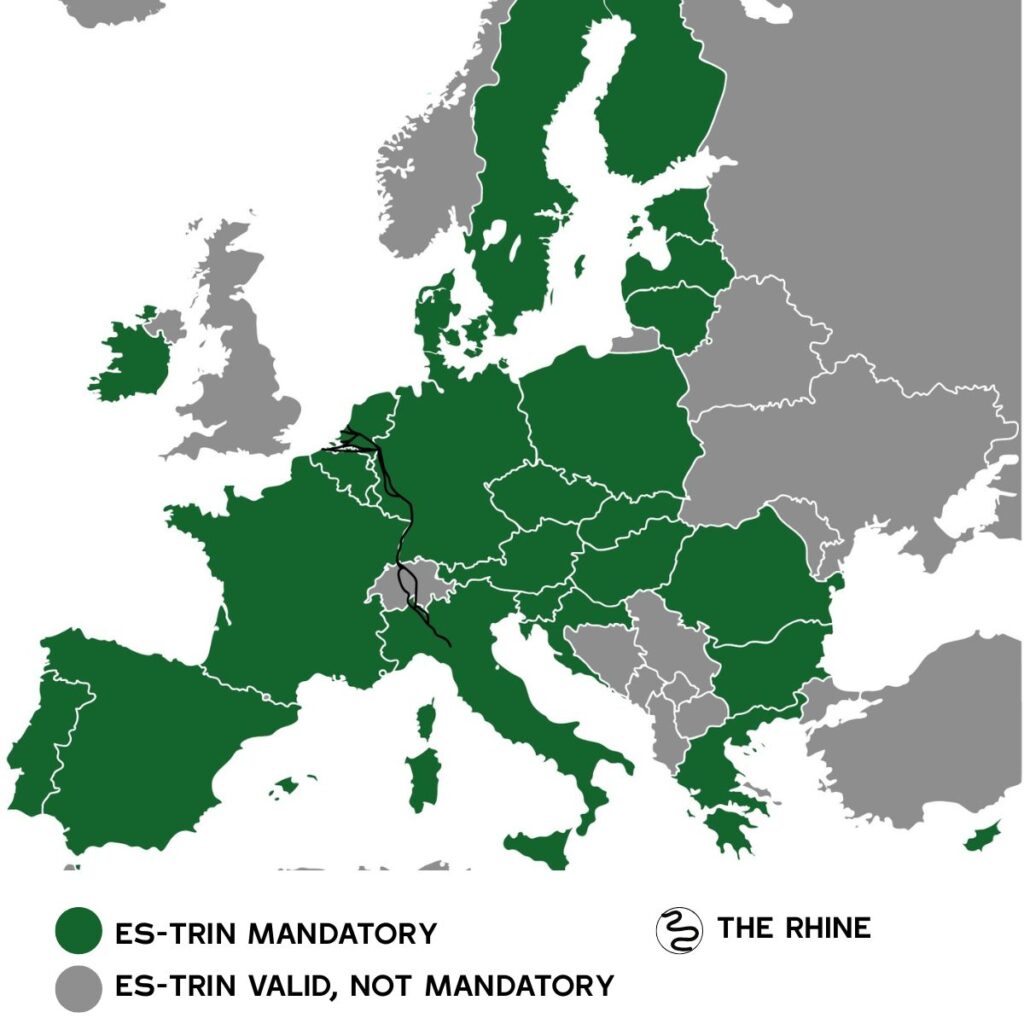
On many European inland waterways, an ES-TRIN certificate is a mandatory requirement. Countries have divided their waters into zones based on wave height and conditions. Only on smaller or enclosed waters, such as sand pits, ditches between meadows and other non-navigable waters, is certification often not mandatory. Nevertheless, we recommend adhering to these strict standards there too: the safety of the operator and the machine always comes first.
Even on non-mandatory waterways, it is strongly recommended that you use certified equipment, as this significantly improves safety and stability.
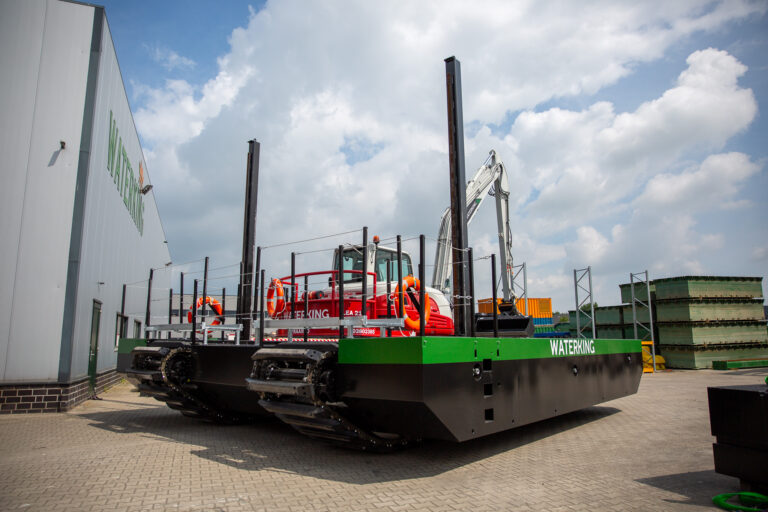
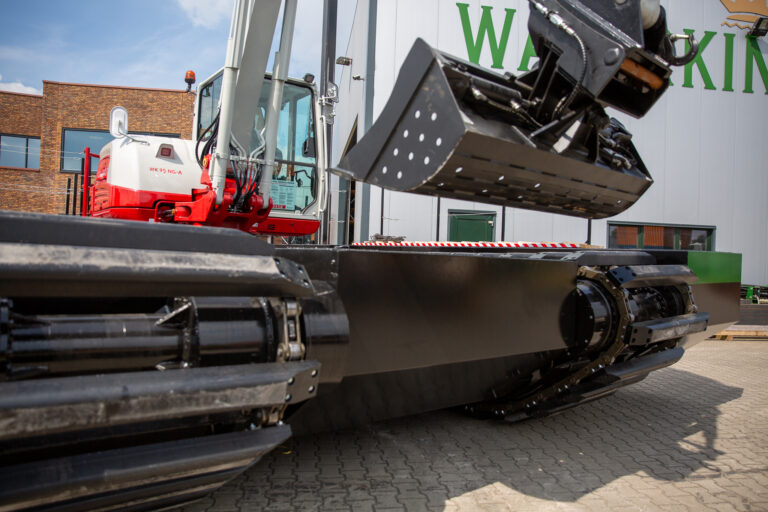
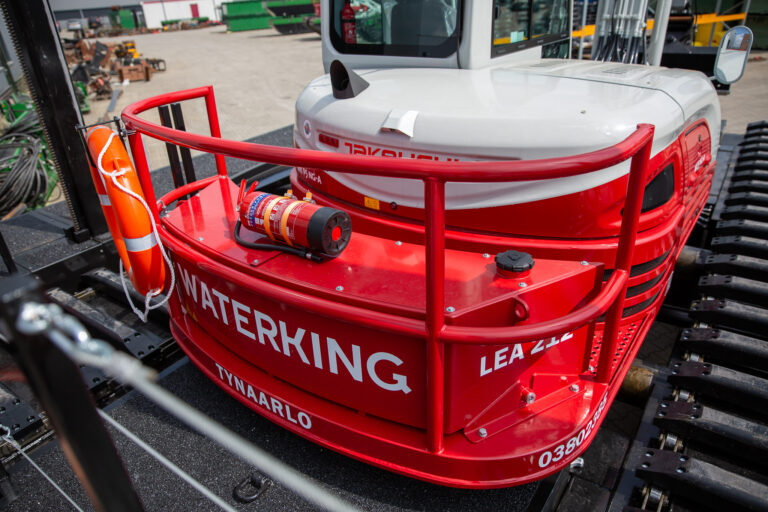
By using additional pontoons (on the sides and in the centre), the machine is much more stable, further minimising the risk of capsizing. In addition, extra safety railings have been fitted to prevent ‘man overboard’ incidents as far as possible.
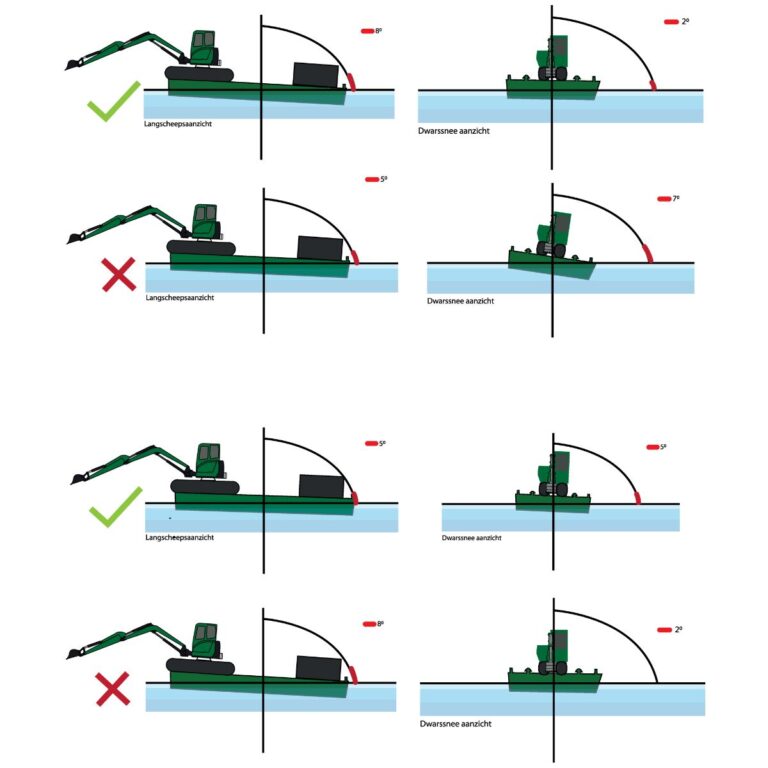
Thanks to the wide pontoons on the sides of our amphibious excavators and the middle pontoon, we achieve a maximum inclination of five degrees, as required by German regulations. This version is the most stringent to date.
By complying with these regulations, Waterking stands out from standard machines.
Germany applies the strictest standard: a machine may tilt a maximum of five degrees, even with a full load, a fully extended boom, and at maximum hydraulic power. Our machines easily meet this requirement. This makes Waterking machines deployable throughout Europe and safer than any other amphibious excavator.
Waterking is one of the pioneers in the field of ES-TRIN-certified amphibious excavators in Europe.
Do you have a question about our amphibious excavators with ES-TRIN? Or are you unsure how these regulations can actually help you? Please get in touch! We’d be happy to discuss this with you.
Specialist in amphibious excavators and dredging equipment. More than 35 years of experience in waterworks.
© 2025 Waterking. All rights reserved.